
Tile Floor Water Damage Restoration: A Hidden Risk in Mitchell, GA
Did you know that tile floor water damage can lead to costly insurance claims? In fact, according to industry estimates, water damage claims can exceed $10,000 or more in severe cases. That’s why it’s crucial to act quickly and work with a trusted team to mitigate the damage and reduce costs. Our team has seen firsthand the devastating effects of delayed response times, and we’re here to guide you through the process.
With over 165 five-star reviews from satisfied customers in Mitchell, GA, and surrounding areas, you can trust our team to provide top-notch service and restore your tile floors to their original glory.
- We help you document the damage for insurance purposes, ensuring you get the compensation you deserve.
- We use advanced equipment to extract water and dry your floors quickly, reducing the risk of mold and mildew growth.
- We work closely with your insurance provider to ensure a smooth claims process and reduce out-of-pocket expenses.
How Tile Floor Water Damage Restoration Works in Mitchell, GA
When water damage occurs, every minute counts. That’s why our team follows a strict process to ensure timely and effective restoration. We start by assessing the damage, identifying the source of the leak, and determining the best course of action. Our technicians then use specialized equipment to extract water and dry your floors, often within 60 minutes of arrival.
Step 1: Assessment and Leak Detection
We use advanced tools to locate the source of the leak and assess the extent of the damage. Our team will identify the type of flooring and find out the best approach for restoration.
Step 2: Water Extraction
We use specialized equipment to extract water from the affected area, often within 60 minutes of arrival. Our team will work quickly to reduce the risk of further damage.
Step 3: Drying and Dehumidification
We use industrial-grade dehumidifiers and drying equipment to remove excess moisture from the affected area. This step is crucial in preventing mold and mildew growth.
Step 4: Flooring Restoration
Our team will assess the extent of the damage to your tile floors and recommend the best course of action for restoration. This may involve refinishing, regrouting, or replacing damaged tiles.
Step 5: Final Inspection and Clean-up
We conduct a thorough final inspection to ensure the job is complete and your floors are safe to use. Our team will also clean up any debris and leave your property in its original condition.
Don’t wait until it’s too late, call us today to schedule an on-site assessment and start the restoration process.
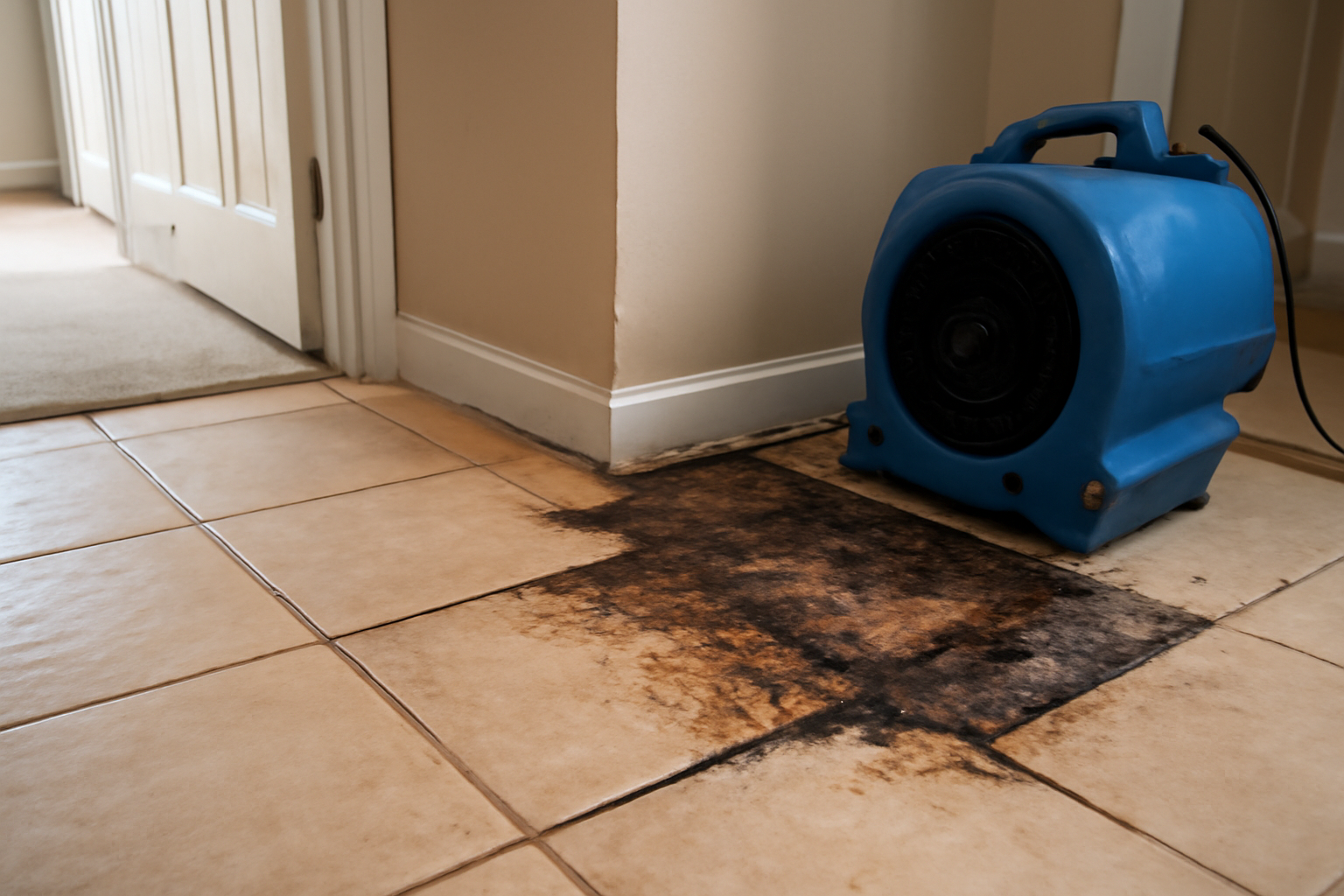
Warning Signs You Need Tile Floor Water Damage Restoration
Ignoring warning signs can lead to costly repairs and even health risks. Keep an eye out for these common indicators of tile floor water damage:
Musty Odors That Won’t Go Away
Strong, unpleasant odors can show the presence of mold and mildew. If you notice a persistent musty smell in your home, it’s time to investigate.
Warped or Buckled Flooring
Water damage can cause your tile floors to become warped or buckled. If you notice any unusual warping or discoloration, it’s essential to act quickly.
Water Stains on Ceilings or Walls
Water stains can be a sign of a more significant issue. If you notice water spots or stains on your ceilings or walls, it’s time to investigate the source.
Increased Humidity or Moisture
High humidity or moisture levels can lead to mold and mildew growth. If you notice a sudden increase in humidity or moisture, it’s essential to take action.
Cracks in Walls or Floors
Cracks in your walls or floors can show structural damage. If you notice any cracks, it’s crucial to investigate the cause and take action.
Unusual Sounds or Leaks
Unusual sounds or leaks can be a sign of water damage. If you notice any unusual noises or leaks, it’s time to investigate the source.
Tile Floor Water Damage Restoration vs. DIY: When to Call a Professional
| Situation | DIY? | Call a Pro? | Why |
|---|---|---|---|
| Small water spill on a single tile | Yes | No | You can likely clean and dry the tile yourself. |
| Water damage affecting multiple rooms or floors | No | Yes | A professional team can assess and restore the damage quickly and effectively. |
| Visible signs of mold or mildew growth | No | Yes | A professional team can safely remove and remediate mold and mildew growth. |
| Leaks or water damage affecting electrical systems | No | Yes | A professional team can safely assess and repair electrical systems. |
| Water damage affecting structural elements (e.g., walls, floors) | No | Yes | A professional team can assess and repair structural damage to ensure safety and prevent further damage. |
Don’t take on the risk of DIY repairs, call a professional team to ensure your tile floors are restored to their original glory.
Tile Floor Water Damage Restoration Cost in Mitchell, GA
The cost of tile floor water damage restoration can vary depending on the severity of the damage, size of the affected area, and local conditions in Mitchell, GA. Our team will provide a free on-site assessment to find out the best course of action and provide a detailed estimate.
| Service | Typical Price Range | What Affects Cost |
|---|---|---|
| Water Extraction and Drying | $500 – $2,500 | Size of affected area, type of flooring, and severity of damage |
| Tile Floor Restoration (regrouting, refinishing) | $1,000 – $5,000 | Number of tiles affected, type of tile, and complexity of restoration |
| Mold and Mildew Remediation | $1,500 – $3,000 | Severity of mold and mildew growth, size of affected area, and type of remediation required |
| Structural Repair (walls, floors) | $2,000 – $10,000 | Severity of structural damage, size of affected area, and complexity of repair |
Exact pricing will depend on an on-site assessment and free estimate. Don’t wait, call us today to schedule an appointment.
Service Areas Near Mitchell, GA
We serve the following areas: Augusta, Aiken, North Augusta, Grovetown, Evans, Martinez, Harlem, Hephzibah, Blythe, Waynesboro, Thomson, Lincolnton, Millen, Sylvania, Metter, Claxton, Glennville, Jesup, Hazlehurst, Lumber City, Alma, Waycross, Blackshear, Folkston, Kingsland, St. Marys, Kingsland, Folkston, Kingsland, St. Marys.
Common Questions About Tile Floor Water Damage Restoration
Q: How long does tile floor water damage restoration take?
A: The restoration process can take anywhere from a few hours to several days, depending on the severity of the damage and the size of the affected area. Our team will provide a detailed estimate and timeline for your specific project.
Q: Will my insurance cover the costs of tile floor water damage restoration?
A: Yes, many insurance policies cover water damage restoration. Our team will work closely with your insurance provider to ensure a smooth claims process and reduce out-of-pocket expenses.
Q: Can I perform tile floor water damage restoration myself?
A: While it may be tempting to try DIY repairs, it’s often not the best option. Water damage can be complex, and improper repairs can lead to further damage and even health risks. Trust a professional team to ensure your tile floors are restored to their original glory.
Q: What is the average cost of tile floor water damage restoration in Mitchell, GA?
A: The average cost of tile floor water damage restoration in Mitchell, GA can vary depending on the severity of the damage and the size of the affected area. Our team will provide a free on-site assessment and detailed estimate for your specific project.
Q: What is the difference between water extraction and drying?
A: Water extraction refers to the removal of water from the affected area, while drying refers to the process of removing excess moisture from the area to prevent mold and mildew growth. Our team will use specialized equipment to extract water and dry your floors quickly and effectively.


